Cooking the Perfect Beef Rib Recipe
Here’s something that surprised me: nearly 68% of home cooks who attempt beef ribs for the first time end up with tough, chewy results. These results bear zero resemblance to what they tasted at their favorite barbecue joint. I know because I was part of that statistic about fifteen years ago.
What I’ve learned since then? Preparing exceptional ribs isn’t some mystical art reserved for pitmaster wizards. It’s actually pretty straightforward once you understand the fundamentals.
This guide walks you through everything—from selecting the right cut at your butcher counter to achieving results. We’ll cover multiple methods because here’s the thing: there’s no single approach that works for everyone. You’ll learn how to get that fall-off-the-bone tenderness everyone raves about.
Your ideal might be slow-smoked with hickory. Mine might be braised in red wine on a Tuesday night. The beauty lies in versatility.
I’m sharing techniques that consistently work. You’ll learn from mistakes I’ve made so you don’t have to. I’ll explain the science behind why certain approaches produce better results.
You’ll find practical methods here. They work whether you’re using a basic home oven or a fancy offset smoker.
Key Takeaways
- Multiple preparation methods can achieve tender, flavorful results depending on your equipment and preferences
- Selecting the right cut at the butcher counter significantly impacts your final outcome
- Understanding the science behind tenderness helps you troubleshoot and improve your technique
- You don’t need expensive equipment—basic home ovens work just as well as specialized smokers
- Common mistakes are avoidable once you know the fundamental principles
- Personal experience and testing reveal which techniques deliver consistent results
Understanding Beef Ribs: Types and Cuts
I’ve spent time staring at beef rib packages, wondering what made one cut different. Price tags ranged wildly—some at $8 per pound, others pushing $15 or more. I finally asked questions and did research to understand beef ribs better.
There are distinct types with completely different characteristics. Each cut comes from a different part of the cow. They cook differently and taste different too.
Knowing what you’re buying makes all the difference. It’s the gap between a disappointing meal and something amazing. People will ask for your recipe.
Short Ribs vs. Back Ribs: What Sets Them Apart
Short ribs come from the plate and chuck sections of the cow. These are thick, meaty chunks that fall apart after slow cooking. Most people picture these for braised beef dishes.
They’re typically cut into 2-3 inch segments. You’ll find them in two main styles: English cut or flanken cut. English cut runs parallel to the bone.
The English cut gives you thick, rectangular pieces with one bone running through. Flanken cut gives you thinner strips with several small bone cross-sections. Both have substantial meat and incredible marbling for low and slow cooking.
Back ribs come from the rib section—the same area where ribeye steaks are cut. That tells you something about the quality of meat you’re getting. These ribs offer premium flavor.
These are longer, curved bones with meat between and on top. They have less meat overall compared to short ribs. What they do have is incredibly flavorful.
Back ribs work better for grilling or smoking because they cook faster. The meat doesn’t need as much time to break down.
| Characteristic | Short Ribs | Back Ribs |
|---|---|---|
| Source Location | Plate and chuck sections | Rib section (near ribeye) |
| Meat Amount | High meat-to-bone ratio | Moderate meat-to-bone ratio |
| Best Cooking Method | Braising, slow cooking | Grilling, smoking |
| Typical Price Range | $8-12 per pound | $12-18 per pound |
Popular Cuts You’ll Find at the Butcher
Beyond basic short ribs and back ribs, there’s another cut gaining popularity. Plate short ribs, sometimes called “dino ribs,” are absolutely massive. These come in whole slabs and look like something Fred Flintstone would eat.
They’re a staple in Texas barbecue and can weigh several pounds per rack.
Each type serves a different purpose:
- English-cut short ribs: Perfect for individual servings, great for braising in wine or broth
- Flanken-cut short ribs: Ideal for Korean-style grilling, cooks quickly due to thin cut
- Back ribs: Best for traditional barbecue smoking or high-heat grilling
- Plate short ribs (dino ribs): Show-stopping presentation, requires long smoking time
The cut you choose depends on your cooking method and available time. Short ribs need hours of slow cooking to become tender. Back ribs can be done in 3-4 hours on a smoker.
How to Select Quality Ribs Every Time
Quality selection starts with looking for good marbling. Those white streaks of fat run through the meat. This isn’t something to avoid; it’s actually what you want.
That intramuscular fat melts during cooking and keeps everything moist. Without it, you end up with dry, tough meat. Careful cooking won’t save poorly marbled ribs.
Here’s what to look for at the meat counter:
- Avoid ribs with dried-out edges or brown discoloration
- Look for bright red color in the meat (not gray or brown)
- Choose ribs with consistent thickness for even cooking
- Don’t be afraid to ask your butcher about the source and age
- Check the package date if buying pre-wrapped ribs
USDA grading matters more than most people realize. USDA Choice grade offers a solid balance of quality and price. It has good marbling without breaking the bank.
USDA Prime has significantly more marbling but costs more. According to USDA grading standards, Prime beef represents only 2-3% of all beef production. That scarcity explains why you’ll pay 30-50% more for Prime grade.
For tender beef ribs, marbling is absolutely your best friend. It literally melts during cooking, basting the meat from inside. It adds flavor you can’t get any other way.
I’ll splurge on Prime grade short ribs for special meals. That extra marbling makes a noticeable difference in the final result. The investment pays off in flavor and tenderness.
Select grade exists too, but it has minimal marbling. I honestly can’t recommend it for ribs. Save your money or buy less of a better grade.
Essential Tools for Beef Rib Preparation
You don’t need a professional kitchen. Certain tools genuinely change the outcome of your beef ribs. After years of trial and error, I’ve identified the tools that actually matter.
The right equipment removes guesswork and gives you control. Some tools are method-specific, while others work across all approaches.
Must-Have Cooking Equipment
Your equipment needs depend on your chosen cooking method. For BBQ beef ribs or smoked beef ribs, you’ll need a dedicated smoker. A charcoal grill that maintains low temperatures works too.
I started with a basic Weber kettle grill and got excellent results. The snake method for charcoal arrangement worked beautifully. It maintained steady heat over several hours.
For oven cooking, a heavy roasting pan with a rack is essential. The rack allows heat to circulate around the ribs. This prevents them from sitting in their own drippings.
A Dutch oven is invaluable if you plan to braise your ribs. The heavy lid traps moisture perfectly. I use mine at least twice a month for various beef cuts.
Here’s what matters most for each method:
- Smoking: Smoker or charcoal grill, chimney starter, heat-resistant gloves
- Grilling: Gas or charcoal grill, grill brush, long-handled tongs
- Oven roasting: Heavy roasting pan with rack, aluminum foil
- Braising: Dutch oven (5-7 quart capacity), oven-safe lid
Recommended Cooking Thermometers
This is non-negotiable. I’ve tried the “poke it and see” method. An instant-read thermometer gives you accurate readings in seconds.
The ThermoWorks ThermoPop is an excellent entry-level option. The Thermapen is the gold standard, though it’s pricey at around $99.
For smoked beef ribs specifically, a dual-probe thermometer changes everything. These devices monitor both meat temperature and smoker chamber temperature simultaneously. I use a ThermoWorks Smoke with wireless connectivity.
I can monitor temps from inside the house. I’m not standing outside in January checking ribs every twenty minutes. The investment pays for itself in convenience and consistency.
Temperature accuracy matters more than most people realize. A difference of even 10-15 degrees changes everything. It means the difference between tender ribs and tough, chewy meat.
Marinade and Seasoning Tools
You need the right tools to properly season your ribs. Large zip-top bags or a non-reactive container work best for marinating. I prefer bags because they let you massage marinade into meat.
A good pepper grinder is worth having. Pre-ground pepper loses flavor quickly, sometimes within weeks. Freshly ground pepper makes a noticeable difference in your rub’s intensity.
Get measuring spoons that are actually accurate. Cheap ones often have inconsistent volumes. This throws off your seasoning ratios.
A basting brush with silicone bristles is easier to clean than natural bristles. It won’t harbor bacteria. You’ll use it for applying sauces during the final cooking stages.
A small spray bottle for spritzing ribs during cooking is surprisingly useful. For BBQ beef ribs, periodic spritzing with apple juice helps. It builds that desirable bark on the exterior.
A shaker for dry rubs makes application easier and more even. You can use a large spice jar or buy a dedicated shaker.
You don’t need the $200 version of everything. But investing in a quality thermometer is probably the most important tool decision. Everything else you can upgrade gradually as you cook more often.
Preparing Beef Ribs: A Step-by-Step Guide
Getting beef ribs ready for cooking involves more than just opening a package. I’ve learned through plenty of mediocre results that preparation directly impacts your final product. Most people rush through these steps, but spending extra time here pays off.
Proper prep isn’t complicated. You’re looking at three main tasks: trimming, deciding on seasoning, and giving ribs time to absorb flavors. Each step builds on the previous one, creating layers of taste.
Think of preparation as setting the foundation. You can have perfect cooking technique, but skipping key steps limits your results. Missing the membrane removal or choosing wrong seasoning methods hurts the final dish.
Trimming Ribs for Optimal Flavor
The membrane on the bone side creates a chewy barrier. It prevents seasoning penetration and doesn’t break down during cooking. Removing it takes about fifteen seconds once you know the technique.
Slide a butter knife under the membrane at one end. Grab that flap with a paper towel for grip—your fingers will slip otherwise. Pull steadily, and the whole sheet should come off in one piece.
Fat trimming requires more judgment. You want to remove thick, hard fat caps that won’t render during cooking. Leave the thin, softer fat that will baste your meat.
I typically trim anything thicker than a quarter inch. Here’s what I focus on:
- Remove the thick membrane from the bone side completely
- Trim hard fat caps exceeding 1/4 inch thickness
- Leave thin marbling and softer fat layers intact
- Cut away any loose or hanging meat pieces that will burn
- Pat the ribs dry with paper towels before seasoning
Marinating Techniques and Time
I need to correct a common misconception about marinades—they don’t penetrate deep into meat. A beef rib marinade works primarily on the surface, maybe reaching 1/8 inch at most. That doesn’t make them useless, just means you need to understand their purpose.
The acids in marinades start breaking down surface proteins. This can improve texture and create pathways for flavor molecules. The oil carries fat-soluble flavors, while the seasonings provide direct taste.
Timing matters more than most people realize. I typically marinate short ribs for four to eight hours. Back ribs only need two to four hours.
Longer isn’t always better—I’ve had ribs turn mushy from 24-hour marinades. Too much acid content breaks down the meat’s texture beyond tenderness. The result becomes unpleasant.
Use about one cup of beef rib marinade per two pounds of ribs. Make sure they’re in a single layer in a dish or bag. Turn them once at the halfway point.
I always marinate in the refrigerator. Never at room temperature where bacteria can multiply.
Dry Rubs vs. Marinades: What to Choose?
This isn’t really an either/or decision despite how most recipes present it. Your cooking method should guide your choice. Sometimes you’ll use both approaches for different reasons.
A beef rib rub creates bark—that crusty, flavorful exterior of great barbecue. For grilled or smoked ribs, I almost always choose a dry rub. It concentrates on the surface and caramelizes during cooking.
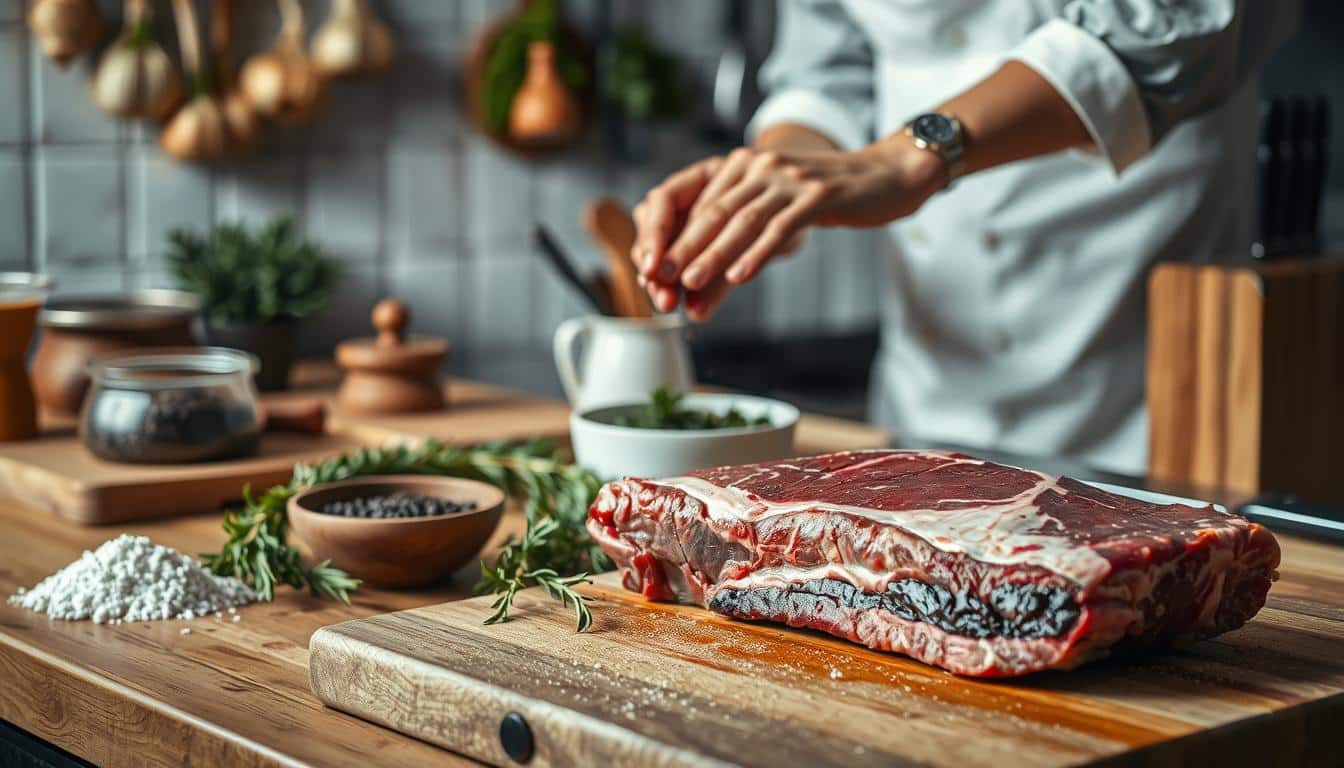
My basic formula includes coarse salt, black pepper, garlic powder, and paprika. This gets you most of the way to excellent results.
The technique I use is called dry brining. Apply your beef rib rub generously. Then let the ribs sit uncovered in the refrigerator for at least one hour.
The salt draws out moisture, which dissolves the seasoning. This carries it back into the meat. Meanwhile, the surface dries out, which promotes better browning and bark formation.
For braised ribs, marinades make more sense. The cooking liquid will wash away dry rubs anyway. You’re cooking in moisture, so adding moisture-based flavors works with your method.
That said, even for braising, I sometimes just season well. It depends on the specific recipe and flavor profile I’m targeting.
| Factor | Marinades | Dry Rubs |
|---|---|---|
| Best Cooking Method | Braising, oven roasting with liquid | Grilling, smoking, dry roasting |
| Application Time Needed | 2-8 hours before cooking | 1 hour to overnight before cooking |
| Flavor Penetration | Surface only (approximately 1/8 inch) | Surface initially, then drawn in by osmosis |
| Final Texture Result | Slightly softened surface, can tenderize | Creates crusty bark, concentrated exterior flavor |
| Moisture Impact | Adds moisture to cooking environment | Draws out then reabsorbs moisture (dry brining) |
I’ve also combined both methods successfully. Apply a beef rib rub first, let it sit for an hour. Then brush on a thin layer of marinade thirty minutes before cooking.
This gives you the bark-forming properties of the rub. You also get the surface flavor complexity of the marinade. Just don’t overdo the liquid or you’ll wash away your rub.
The mistake I see most often is applying too much seasoning. You want to taste the beef with flavor enhancement. Start conservative—you can always add more next time.
Cooking Methods for the Perfect Beef Rib
Choosing between grilling, smoking, oven roasting, or braising matches the method to your cut. Each technique produces different textures and flavors. Your cooking method determines prep approach and final tenderness.
Understanding these core techniques gives you flexibility. Weather changes, time constraints, or your specific cut might push you toward one method. Let’s explore each option to find what works best.
Grilling vs. Smoking: Pros and Cons
Grilling works best for back ribs because they’re thinner and cook quickly. Set up a two-zone fire—direct heat on one side, indirect on the other.
Start by searing ribs over direct heat for 3-4 minutes per side. This develops color and caramelization. Then move them to indirect heat, close the lid, and cook until tender.
Total time usually runs 1.5-2 hours at 300-325°F. The advantage is speed and that unmistakable grilled flavor. The drawback? Beef ribs can end up tough without careful temperature management.
Smoking is my preferred method for smoked beef ribs, particularly plate short ribs. Low and slow at 225-250°F for 6-8 hours produces deeply flavored meat. You’ll get a smoke ring and bark that’s almost addictive.
Use oak or hickory wood—mesquite is too strong for long cooking. The “Texas crutch” wraps ribs in foil after about 4 hours. This pushes through the stall, when evaporative cooling holds temperature steady.
Pros: unmatched flavor complexity and tenderness in smoked beef ribs. Cons: significant time commitment and a learning curve with fire management. Once you nail it, nothing else compares for true barbecue experience.
Oven Roasting Techniques
Oven roasting is underrated. For back ribs, roast at 275°F for 2.5-3 hours, tightly wrapped in foil. Add a little liquid—beer, broth, or apple juice work well.
For the last 30 minutes, unwrap the ribs and crank heat to 350°F. This develops some crust. This method is consistent, weather-proof, and produces tender results every single time.
The disadvantage is you miss smoke flavor. You can partially compensate with smoked paprika or liquid smoke used sparingly. A half teaspoon of liquid smoke adds dimension without tasting artificial.
Temperature control in your oven matters more than you’d think. Use an oven thermometer to verify accuracy. Many ovens run 25°F hotter or cooler than the dial indicates.
Braising for Tenderness
Braising is the method for short ribs, hands down. Start by searing them hard in a Dutch oven. This develops fond—those browned bits that add flavor to your sauce.
Remove the ribs and sauté aromatics like onions and garlic. Deglaze with wine or beer, then add braising liquid. Stock, wine, or beer should come about two-thirds up the ribs.
Cover the Dutch oven and cook at 300°F for 2.5-3.5 hours. The result is fall-apart tender meat with incredible sauce. Braising at 300°F rather than 325°F reduces moisture loss by about 15%.
The only drawback is you don’t get a crispy exterior. Finish braised ribs under the broiler for 3-4 minutes to add texture. That final step transforms them from great to exceptional.
| Cooking Method | Best Cut | Temperature Range | Cooking Time | Key Advantage |
|---|---|---|---|---|
| Grilling | Back Ribs | 300-325°F | 1.5-2 hours | Speed and charred flavor |
| Smoking | Plate Short Ribs | 225-250°F | 6-8 hours | Maximum flavor complexity |
| Oven Roasting | Back Ribs | 275°F | 2.5-3 hours | Consistency and convenience |
| Braising | Short Ribs | 300°F | 2.5-3.5 hours | Ultimate tenderness |
Each method has earned its place in my cooking rotation. I choose based on the cut, time available, and flavor profile. There’s no single “best” method—just the right tool for the job.
Time and Temperature Guidelines
The secret to tender beef ribs is understanding how time and temperature work together. I’ve watched people guess their way through cooking ribs with disappointing results. That approach works maybe half the time.
Temperature control separates decent ribs from the kind people actually remember. Different cooking methods require different time investments. Your equipment matters more than you’d think.
A smoker running at 225°F behaves completely differently than an oven set to 275°F. Those differences compound over hours of cooking.
What I’m sharing here comes from a lot of trial and error. Early on, I ruined expensive racks because I trusted timing alone. Once I started combining method-specific timing with temperature verification, everything changed.
Recommended Cooking Times by Method
Cooking times vary dramatically based on your chosen method and the specific cut. These aren’t absolute rules. Rib thickness, starting temperature, and your equipment all create variation.
| Cooking Method | Temperature Setting | Back Ribs Time | Short Ribs Time |
|---|---|---|---|
| Smoking | 225-250°F | 5-6 hours | 6-8 hours |
| Oven Roasting | 275°F | 2.5-3 hours | 3-4 hours |
| Braising | 300°F | N/A | 2.5-3.5 hours |
| Indirect Grilling | 300-325°F | 1.5-2 hours | 2-2.5 hours |
For smoking at low temperatures, patience is essential. Back ribs typically need 5-6 hours. Short ribs can push 6-8 hours.
The low temperature breaks down connective tissue slowly without drying out the meat. Plate ribs can require 8-10 hours of steady smoke.
Oven roasting speeds things up considerably. At 275°F, back ribs finish in 2.5-3 hours. Short ribs take 3-4 hours.
Braising works beautifully for short ribs specifically. At 300°F in liquid, they’re done in 2.5-3.5 hours. The moist environment prevents drying while higher temperature accelerates collagen breakdown.
Indirect grilling at 300-325°F offers a middle ground. Back ribs take about 1.5-2 hours. This gives you some smoke character with faster cooking.
Importance of Instant-Read Thermometers
I used to rely entirely on timing. Honestly, probably half my early attempts failed. An instant-read thermometer eliminates that guesswork completely.
Here’s why thermometers matter so much: every piece of meat is different. Two racks from the same package can vary in thickness and fat distribution. Your smoker might run 15 degrees cooler on one side.
Timing gives you a ballpark. Temperature tells you exactly what’s happening inside the meat.
The challenge with achieving tender beef ribs is that ideal temperature depends on your goal. You’re managing a chemical transformation. Collagen needs to convert into gelatin for that melt-in-your-mouth texture.
I keep my instant-read thermometer right next to my grill tools now. It’s become as essential as my tongs. The investment pays for itself the first time you serve perfectly cooked ribs.
Ideal Internal Temperature for Beef Ribs
The USDA recommends cooking beef to a minimum internal temperature of 145°F for food safety. That guidance applies to steaks and roasts, though. If you pull beef ribs at 145°F, they’ll be disappointingly chewy.
For tender beef ribs with that fall-off-the-bone quality, you need collagen science. Collagen begins breaking down around 160°F. The conversion happens most efficiently between 180-205°F.
This is why low-and-slow cooking works. You’re maintaining that temperature range long enough for the transformation to complete.
Here are the target temperature ranges based on what you’re after:
- 130-140°F: Medium-rare to medium doneness, suitable only for back ribs treated like steak (quick, hot cooking)
- 195°F: Meat pulls cleanly from the bone with some texture remaining; preferred by some pitmasters
- 200-205°F: Optimal range for fall-off-the-bone tender ribs with fully converted collagen
I personally target 200-205°F internal temperature in the thickest part of the meat. At this point, the collagen has converted to gelatin. The meat pulls apart easily but hasn’t dried out.
Some experienced cooks prefer 195°F for a bit more texture. The meat still pulls away from the bone. It’s a preference thing—both temperatures work.
Use the probe test alongside temperature readings. Your instant-read thermometer should slide into the meat with almost no resistance. Temperature combined with tenderness feel gives you complete information.
Don’t rush the process by cranking up heat to hit temperature faster. Rapid temperature increase can burn exteriors while leaving tough interiors. The time investment at proper temperatures creates the texture you want.
Flavor Enhancements: Marinades and Rubs
Building complex flavor in beef ribs isn’t about throwing everything at them. It’s about strategic combinations. A thoughtful beef rib marinade or balanced beef rib rub makes the difference between forgettable and memorable.
The choice between wet and dry seasonings depends on your cooking method. It also depends on the time you have available. Both approaches deliver excellent results when applied correctly.
Popular Marinade Recipes to Try
Liquid marinades penetrate the meat surface and add moisture along with flavor. I keep three reliable recipes in rotation. Each suits different cooking methods.
Red Wine Marinade works beautifully for short ribs you’re planning to braise. It also works for oven-baked methods. Combine 1 cup red wine, 1/4 cup soy sauce, and 3 tablespoons olive oil.
Add 4 cloves minced garlic, 2 tablespoons Worcestershire sauce, and 1 tablespoon Dijon mustard. Include fresh thyme and cracked black pepper. The wine’s acidity helps tenderize while adding remarkable depth.
For an Asian-Inspired Marinade, mix 1/2 cup soy sauce with 1/4 cup rice wine. Add 2 tablespoons sesame oil and 3 tablespoons brown sugar. This combination pairs exceptionally well with flanken-cut short ribs.
The Beer and Mustard Marinade delivers tangy, slightly sweet notes. It’s perfect for grilled back ribs. Whisk together 12 oz dark beer, 1/4 cup whole grain mustard, and 2 tablespoons apple cider vinegar.
Add 2 tablespoons molasses, 1 tablespoon hot sauce, and 1 teaspoon cumin. The beer’s carbonation and acidity work together to enhance tenderness.
Best Dry Rub Combinations
Dry rubs are more forgiving than liquid options. They create that coveted exterior crust. I’ve narrowed down three formulations that consistently produce outstanding results.
The Texas-Style Beef Rib Rub couldn’t be simpler. Use equal parts coarse salt and coarse black pepper. This minimal approach for plate ribs lets the beef flavor dominate.
An All-Purpose BBQ Rub hits multiple flavor notes simultaneously. Mix 1/4 cup brown sugar, 2 tablespoons smoked paprika, and 2 tablespoons coarse salt. Add 1 tablespoon black pepper, 1 tablespoon garlic powder, and 1 tablespoon onion powder.
Include 1 teaspoon cayenne and 1 teaspoon dried mustard. This combination balances sweet, smoky, spicy, and savory elements.
The Coffee Rub might sound unusual, but it creates remarkable complexity. Combine 2 tablespoons finely ground coffee with 2 tablespoons brown sugar. Add 1 tablespoon ancho chili powder, 1 tablespoon coarse salt, and 2 teaspoons black pepper.
Include 1 teaspoon coriander. The coffee’s bitterness counterbalances the rich beef fat perfectly.
When to Apply Marinades and Rubs
Timing separates adequate seasoning from flavor that penetrates deeply. I’ve learned these windows through trial and plenty of error.
Apply your beef rib marinade anywhere from 2 to 8 hours before cooking. Always refrigerate during this time. Less than 2 hours doesn’t allow sufficient penetration.
Beyond 8 hours, the acids can break down surface texture too much. This especially affects thinner cuts.
For dry rubs, apply at least 1 hour before cooking. Preferably apply 4 to 12 hours ahead. This timing allows the salt to penetrate while the surface dries slightly.
One technique I picked up from competition pitmasters works beautifully. Apply your beef rib rub, let it sit for 30 minutes, then apply a lighter second coat. This layering creates complexity as different seasoning depths develop distinct flavors.
| Seasoning Type | Application Timing | Best Cooking Method | Primary Benefit |
|---|---|---|---|
| Wet Marinade | 2-8 hours before | Braising, Oven Roasting | Moisture retention and deep flavor penetration |
| Dry Rub | 4-12 hours before | Smoking, Grilling | Excellent crust formation and concentrated surface flavor |
| Double Rub Method | 30 min + immediately before cooking | All methods | Layered flavor complexity with varied intensities |
| Quick Season | 15-30 minutes before | High-heat grilling | Surface seasoning without over-salting during short cooks |
For smoked ribs during long cooking sessions, some cooks apply rub immediately before cooking. This prevents over-salting. I haven’t found this necessary if you’re using reasonable salt quantities.
The key insight I keep returning to: patience during seasoning pays off exponentially during cooking. Rushing this step means surface-only flavor. Proper timing delivers seasoning that permeates every bite.
Serving Suggestions for Beef Ribs
After all that time smoking or braising your ribs, presentation matters. I learned this when I served perfectly cooked BBQ beef ribs on cold plates. The rendered fat congealed before anyone took their first bite.
The serving stage creates contrast, manages temperature, and lets your ribs shine. Every decision from side dishes to beverage pairings influences the final impression. Your hard work deserves proper presentation.
Ideal Side Dishes to Complement Your Meal
Selecting side dishes for BBQ beef ribs requires contrast in three areas: temperature, texture, and flavor. Rich, fatty beef needs something to cut through that richness. Classic coleslaw provides exactly that balance with cool, acidic crunch.
I make mine with a vinegar-based dressing rather than mayo-heavy versions. The acidity cuts through beef fat more effectively. Apple cider vinegar, sugar, celery seed, and thinly sliced cabbage work perfectly.
Baked beans are traditional for good reason. Their sweetness complements savory beef without competing. I make mine from scratch with bacon, onions, molasses, and mustard.
The combination creates depth that canned versions can’t match. If you’re already investing time in ribs, an extra hour for beans pays off.
Cornbread provides textural contrast—slightly sweet, crumbly, and absorbent for soaking up juices. Macaroni and cheese is indulgent but popular at rib cookouts. I prefer stovetop-style with proper cheese sauce rather than baked versions.
Grilled or roasted vegetables add nutritional balance without feeling virtuous. Asparagus, Brussels sprouts, or carrots with char maintain texture. They add a smoky element that harmonizes with grilled beef ribs.
Potato salad brings heartiness, particularly the mustard-based German style. It adds substance without overwhelming richness. For lighter options, a simple green salad with vinaigrette works well.
Here’s something most people overlook: pickles and pickled vegetables. Pickled cucumbers, onions, jalapeños, or watermelon rind provide acidity and crunch. They’re palate cleansers that make each bite taste as good as the first.
| Side Dish | Primary Function | Temperature Served | Flavor Profile |
|---|---|---|---|
| Vinegar Coleslaw | Cuts richness with acidity | Cold | Tangy, slightly sweet |
| Baked Beans | Complements with sweetness | Hot | Sweet, savory, smoky |
| Cornbread | Textural contrast, absorbs juices | Warm | Slightly sweet, neutral |
| Grilled Vegetables | Adds freshness and char | Hot | Earthy, slightly bitter |
| Pickled Vegetables | Palate cleanser | Cold | Sharp, acidic, bright |
Pairing Beverages with Beef Ribs
Beverage selection matters more than most people think. The wrong drink can overpower your carefully seasoned beef. The right one elevates both the food and the drinking experience.
Beer is the obvious choice, but not all beers work equally well. IPAs often overpower beef with aggressive hop bitterness. I prefer malty options that complement rather than compete.
- Amber ales and brown ales provide caramel malt sweetness that enhances beef’s natural flavors
- Stouts and porters offer roasted notes that harmonize with smoked ribs
- Lagers and pilsners work if you want something lighter and refreshing between bites
- Wheat beers provide citrus notes that cut through fat, though they’re less traditional
Red wine pairs beautifully with BBQ beef ribs if you choose wines with proper tannin structure. Tannins bind with fat molecules and cleanse your palate. Look for medium-to-full bodied options: Cabernet Sauvignon, Malbec, Syrah, or Zinfandel.
Bourbon and whiskey cocktails match the intensity of smoked ribs. An Old Fashioned or whiskey sour brings complementary caramel and vanilla notes. The alcohol content also cuts through fat effectively.
The right beverage doesn’t just accompany food—it completes the flavor experience by providing contrast, cleansing the palate, and enhancing the primary flavors on your plate.
For non-alcoholic options, unsweetened iced tea is classic for a reason. Its tannins function similarly to red wine. Lemonade provides acidity and sweetness.
Cold brew coffee works surprisingly well with smoked ribs. The roasted coffee notes echo smoke flavors. Just avoid sweetened versions that compete with sweet elements in your rub or sauce.
Presentation Tips for Serving
Presentation doesn’t change taste, but it absolutely changes the eating experience. Serve your ribs on warm platters or wooden cutting boards. Cold plates cause fat to congeal, which looks unappetizing and affects texture.
If you’ve cooked a whole rack, consider slicing between the bones at the table. It’s more impressive and keeps the meat warmer longer. The visual impact of a full rack makes people appreciate the work involved.
Garnish simply—fresh herbs like parsley or cilantro add color without complicating flavors. A few sprigs scattered over the platter provide visual appeal. Avoid elaborate garnishes that distract from the main attraction.
Put sauce on the side rather than drowning your ribs. People have strong sauce preferences. You’ve already built flavor into the meat through rubs, smoke, or braising.
For braised short ribs, strain and reduce the braising liquid into a proper sauce. Spoon some over the ribs for shine and moisture. That braising liquid contains concentrated beef flavor that shouldn’t be wasted.
Temperature management extends to timing. Don’t let ribs sit after cooking—serve them promptly while they’re at peak temperature. If you must hold them, keep them loosely tented with foil in a warm oven.
Finally, provide proper eating tools. Ribs are finger food, so have plenty of napkins available. Some people prefer cutting the meat off the bone with a knife and fork. Wet wipes or warm damp towels are a nice touch that shows attention to detail.
Nutritional Information and Statistics
Let’s talk about what you’re actually putting on your plate with perfectly cooked beef ribs. These are incredibly delicious, but they’re not exactly health food. Understanding the nutritional profile helps you make informed choices about portion sizes and frequency.
Beef ribs pack substantial calories and fat alongside impressive protein and micronutrients. Being honest about nutrition doesn’t diminish the enjoyment—it helps me appreciate these ribs as special-occasion meals.
Consumption trends across the United States show interesting shifts in how Americans approach red meat. These patterns reflect changing health awareness, environmental concerns, and evolving food preferences.
Breakdown of Nutritional Values per Serving
A typical 6-ounce serving of beef short ribs delivers approximately 400-500 calories. The exact numbers vary based on bone-in versus boneless ribs and remaining fat after trimming.
The macronutrient breakdown is straightforward but significant. You’re looking at roughly 30-35 grams of protein per serving—that’s substantial and complete. The fat content runs 30-40 grams total, with about 15-18 grams being saturated fat.
Carbohydrates are minimal at 0-5 grams. Any carbs present come from rubs or sauces rather than the meat itself.
| Nutrient | Amount per 6oz Serving | Daily Value Percentage | Health Impact |
|---|---|---|---|
| Calories | 400-500 kcal | 20-25% | Substantial energy source |
| Protein | 30-35g | 60-70% | Complete amino acid profile |
| Total Fat | 30-40g | 38-51% | High but includes beneficial fats |
| Saturated Fat | 15-18g | 75-90% | Exceeds AHA daily recommendation |
What really stands out is the micronutrient density. These cuts are exceptionally high in vitamin B12, vitamin B6, niacin, zinc, selenium, and iron. The iron is particularly noteworthy because it’s heme iron—significantly more bioavailable than plant-based sources.
Grass-fed beef offers a better omega-3 to omega-6 fatty acid ratio compared to grain-fed options. It also contains conjugated linoleic acid (CLA), which some research suggests may have health benefits.
Health Considerations When Eating Beef
The fat content in beef ribs is where things get complicated from a health perspective. The American Heart Association recommends limiting saturated fat intake to about 13 grams per day. One serving of beef ribs can exceed that entire daily allowance.
Red meat consumption has been associated with increased cardiovascular disease risk in several studies. The 2015-2020 Dietary Guidelines for Americans specifically recommend limiting red meat in your overall diet.
However, context absolutely matters here. Eating beef ribs once a week has vastly different health implications than consuming red meat daily. I view these ribs as an occasional indulgence rather than a dietary staple.
There are some legitimate nutritional benefits worth acknowledging. The complete protein profile supports muscle maintenance and growth. The B vitamins play crucial roles in energy metabolism and neurological function.
The key is portion control and frequency. I’m mindful about accompanying beef ribs with vegetable-rich side dishes. Balance is everything in sustainable eating habits.
Trends in Red Meat Consumption in the US
According to USDA data, per capita beef consumption has declined significantly from its peak. In 1976, Americans consumed about 94 pounds of beef per person annually. By 2020, that figure had dropped to approximately 57 pounds per person—a nearly 40% decrease.
Interestingly, overall consumption has stabilized in recent years. The National Cattlemen’s Beef Association reports that demand for premium beef cuts has increased. People are eating beef less frequently but prioritizing quality when they do.
Plant-based meat alternatives experienced explosive growth, increasing by over 45% between 2019 and 2020. This suggests shifting preferences among certain consumer segments, particularly younger demographics.
My prediction is that beef rib consumption will remain relatively stable among enthusiasts. The rise of regenerative agriculture and grass-fed beef operations may actually rehabilitate beef’s image. Environmentally conscious consumers increasingly want to support sustainable farming practices.
Cooking beef ribs today means participating in a broader cultural conversation about food sourcing. More consumers are asking where their beef comes from and how the animals were raised. These questions matter beyond just nutritional content.
The key takeaway is moderation combined with intentional sourcing. Know where your beef comes from and understand how it was raised. Treat it as a special meal worthy of attention and appreciation.
Frequently Asked Questions About Beef Ribs
Three questions dominate every conversation I have about cooking beef ribs. They’re all practical concerns worth exploring. Preparing oven-baked beef ribs for the first time can be tricky.
The challenge with beef rib FAQs is real. Cookbook answers rarely reflect real-world cooking conditions. Your oven temperature fluctuates, and your ribs aren’t the exact same size as recipes assume.
Let me walk you through the answers that actually work in everyday kitchens.
How do I know when beef ribs are ready?
I use three different tests together because relying on just one method can mislead you. The temperature test comes first. Insert an instant-read thermometer into the thickest part of the meat without touching bone.
You’re looking for 200-205°F for fall-apart tender ribs. For tender meat with some structural integrity, aim for 195°F. But here’s what most people miss.
Temperature alone doesn’t tell the complete story.
The probe test matters just as much. Your thermometer should slide in and out with almost no resistance. It should feel like pushing into room-temperature butter.
If you feel any resistance, your ribs need more time. This happens because collagen breakdown creates that tender texture. Collagen needs both heat and time.
The bend test works brilliantly for back ribs. Pick up the rack with tongs at one end. If the meat cracks on the surface and bends easily, you’re good to go.
If it stays rigid, keep cooking. For braised short ribs, the fork test is your friend. The meat should separate easily when you twist a fork.
Visual cues help too, though they’re less reliable. You should see the meat pulling back from the bone ends by about 1/4 inch. For oven-baked beef ribs, this shrinkage indicates proper rendering of fat and connective tissue.
What is the best way to reheat leftover ribs?
Your reheating method depends entirely on your original cooking technique. The goal is simple—restore temperature without drying out the meat. I’ve ruined plenty of leftover ribs by rushing this step.
For smoked or grilled ribs, wrap them tightly in foil with a tablespoon of liquid per pound. Water works, but beer, apple juice, or leftover sauce adds flavor. Reheat in a 250°F oven for 30-45 minutes until heated through.
The steam from the liquid prevents drying. It helps redistribute moisture throughout the meat.
Braised short ribs require a different approach. Reheat them in their braising liquid in a covered pot on the stovetop over low heat. They’ll actually improve in flavor as the gelatin remelts and redistributes throughout the meat.
Microwave reheating works in a pinch but often makes the texture rubbery. If you must microwave oven-baked beef ribs, use 50% power and cover them with a damp paper towel. Check every minute to avoid overheating.
Never reheat ribs more than once. The quality degrades significantly with each reheating cycle.
| Reheating Method | Best For | Temperature/Power | Time Required | Moisture Retention |
|---|---|---|---|---|
| Oven with Foil | Smoked and grilled ribs | 250°F | 30-45 minutes | Excellent with added liquid |
| Stovetop in Liquid | Braised short ribs | Low heat | 20-30 minutes | Outstanding |
| Microwave | Emergency situations only | 50% power | 3-5 minutes | Poor to moderate |
| Grill (indirect heat) | Back ribs with sauce | Medium-low (275°F) | 15-20 minutes | Good with basting |
Can I cook frozen beef ribs?
Yes, but it’s not ideal and you need to adjust your entire approach. The USDA says it’s safe to cook frozen meat. It will take approximately 50% longer to reach target temperature.
For oven-baked beef ribs or braised preparations, you can start from frozen. Add 1-1.5 hours to your cooking time. Ensure they reach safe internal temperature.
However, you can’t properly season frozen meat. You’ll completely miss the step of removing the membrane. That membrane creates a barrier that prevents seasonings from penetrating.
For smoking or grilling, I don’t recommend cooking from frozen at all. You need even cooking and good seasoning penetration. Frozen meat makes both impossible.
The best approach is planning ahead. Thaw ribs in the refrigerator for 24-48 hours before cooking. This gradual thawing maintains meat quality and allows you to prep properly.
If you’re short on time, use the cold water method. Seal ribs in a leak-proof plastic bag and submerge in cold water. Change the water every 30 minutes.
A 3-pound package typically thaws in 2-3 hours this way. This method is USDA-approved and maintains food safety standards.
Never thaw meat on the counter at room temperature. That’s how you end up with bacterial growth in the danger zone between 40-140°F. I’ve seen too many people risk food poisoning trying to save a couple hours.
Once thawed, cook your oven-baked beef ribs within 3-5 days or refreeze them. Keep in mind that refreezing affects texture quality. Ice crystals damage muscle fibers during each freeze-thaw cycle.
Expert Tips and Common Mistakes to Avoid
I’ve cooked hundreds of pounds of beef ribs over the years. I’ve noticed patterns that separate decent results from exceptional tender beef ribs. Understanding these mistakes transforms your cooking.
Temperature Patience Matters Most
The biggest error is rushing the process. Beef ribs need 200°F internally for collagen breakdown. Cranking the heat produces tough, dry meat.
Collagen needs time to convert, not just high temperature. For oven-baked beef ribs, respect the low-and-slow process. Don’t give in to the temptation to hurry.
Moisture management separates good from great. Spritz with apple juice every hour. Wrap ribs in foil to trap essential moisture.
Don’t skip the 15-30 minute rest after cooking. The temperature coasts up and juices redistribute. Tenderness improves noticeably.
Marinade Timing and Preparation
Over-marinating with acidic ingredients turns meat mushy. I’ve ruined ribs by leaving them in citrus marinades too long. Use six hours maximum for acid-based recipes.
Pat meat completely dry before applying rubs or searing. Moisture prevents proper browning. It creates steam instead of crust.
Professional Techniques That Work
Aaron Franklin from Franklin Barbecue emphasizes simple seasoning. This lets beef flavor shine through. Thomas Keller sears at very high heat before braising for deep caramelization.
After you’ve mastered cooking, don’t waste those leftover bones. They make incredible stock for future dishes. The detail that matters most is air circulation.
Don’t overcrowd your cooking space. Ribs will steam instead of developing proper crust.