What Is a Combi Oven? Home and Commercial Guide
A combi oven is an oven that cooks with dry convection heat, with steam, or with both at once. Rational, which built its first combi oven in 1976, lists three modes: steam from 85 to 265 F, hot air from 85 to 575 F, and a combination of the two. Rational says they are found mainly in commercial kitchens and catering, but home versions now exist as built-in and countertop models.
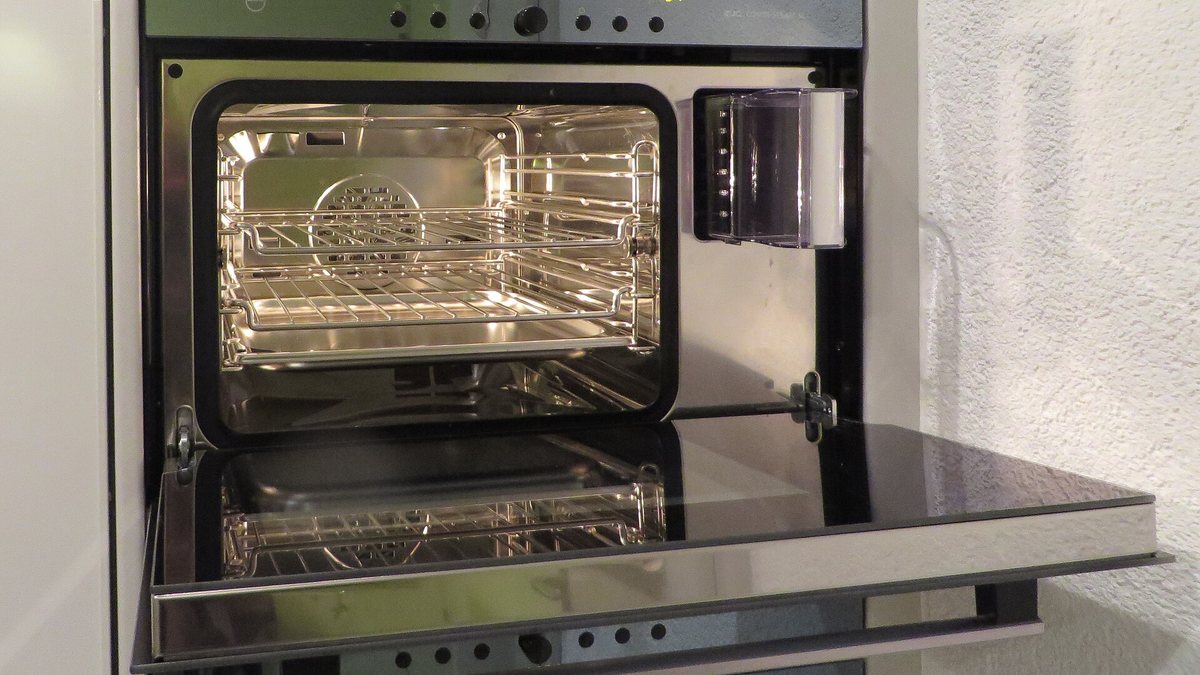
Top photo: a built-in home combi steamer with its water tank on the right. Photo: BBCLCD / Wikimedia Commons (CC BY-SA 3.0)
This guide is the starting point for everything on combioven.org about combi ovens. It explains how they work, how home and commercial models differ, and links to our shorter answers on each topic.
What is a combi oven?
A combi oven, also called a combi-steam oven or combi oven/steamer, is a single cooking cabinet that can make dry heat like a convection oven and moist heat like a steamer, either together or one after the other. Rational describes convection ovens as its predecessor; the difference is that a convection oven has no steam.
The name comes from that combination. If you have seen “combi” on a microwave control panel, that is a different appliance that pairs microwaves with a grill or fan heat; see what combi means on an oven and how a combi microwave works.
How does a combi oven work?
A combi oven has a heating element and fan, like any convection oven, plus a steam generator. The control system adds or removes moisture to hold the humidity the cook has set.
Why add steam at all? Rational explains that air heats quickly but carries heat poorly. When steam meets food that is cooler than the air around it, the steam condenses on the surface and hands over its heat much faster. Moist air also evens out hot and cold spots in the cabinet. The oven can switch between dry heat and steam or blend them, as the recipe needs. For a closer look at the dry side, read whether a combi oven cooks with dry heat.
Boiler vs boilerless steam
Makers produce steam in two main ways. A boiler (steam generator) heats water in a separate tank and feeds steam into the cabinet. A boilerless design makes steam without that separate boiler. Alto-Shaam says its boilerless Prodigi models use 80 percent less water than boiler-based models. Miele lists an external steam generator on its DGC 6805 home model. Electrolux Professional notes that steam generation depends on water quality, which is why water treatment and descaling matter on any type.
Combi oven modes and temperatures
Every combi oven offers the same three basic modes. The ranges below come from each maker’s own documents.
| Model | Type | Steam mode | Dry heat mode | Water supply |
|---|---|---|---|---|
| Rational iCombi Pro | Commercial | 85 to 265 F (30 to 130 C) | 85 to 575 F (30 to 300 C) | See spec sheet |
| Miele DGC 6805 XL | Home, built in | 40 to 100 C | 30 to 225 C | Plumbed, with drain |
| Wolf convection steam oven | Home, built in | See model sheet | Plumbed (CSOP) or hand filled tank (CSO) | |
| Anova Precision Oven 2.0 | Home, countertop | 77 to 482 F, steam 0 to 100 percent | 2.4 L tank | |
Commercial combi ovens
Commercial units are sized by how many gastronorm pans or trays they hold. Alto-Shaam’s Prodigi range, for example, runs from 6 to 40 pans. Alto-Shaam says one combi can do the work of a convection oven, kettle, steamer, fryer and smoker, and Rational lists steaming, baking, grilling, roasting and pan-frying among its uses.
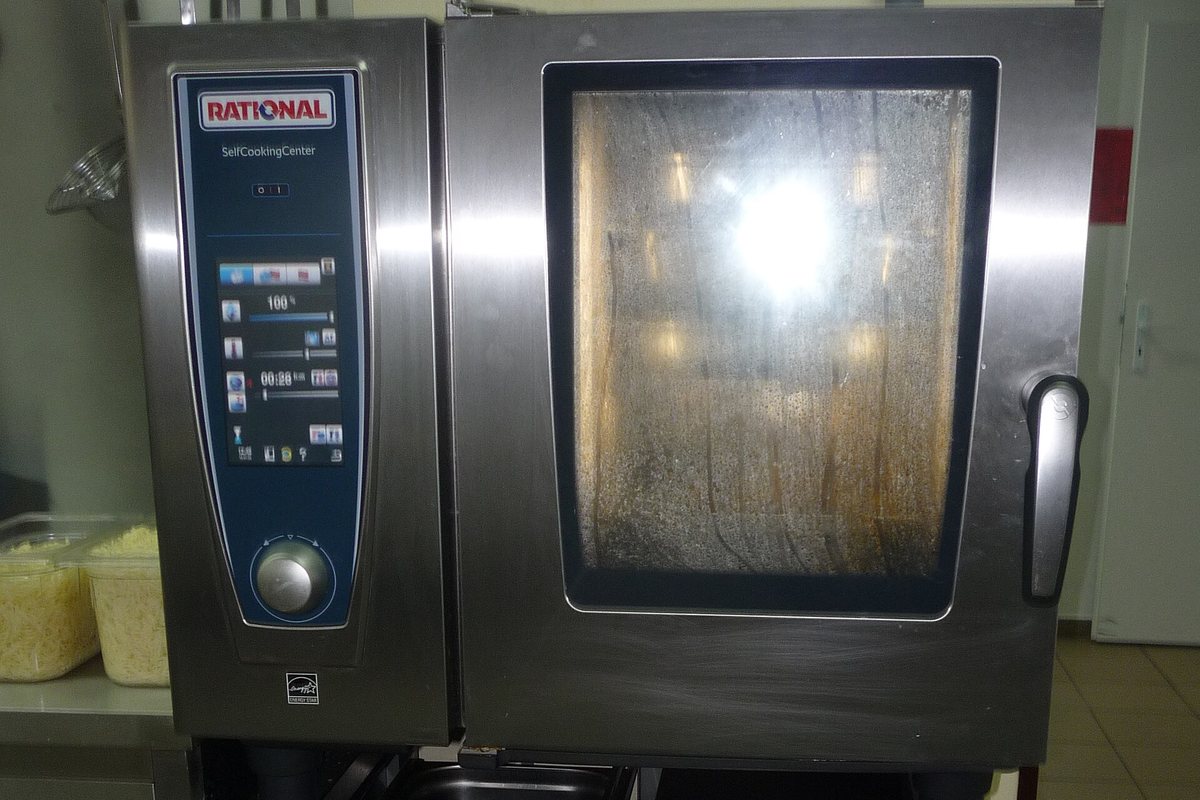
Two features set modern commercial combis apart:
- Automatic cooking paths. On a Rational, the cook picks a food group (poultry, seafood, meat, side dishes, egg dishes or baked goods), and the oven detects the load and adjusts the process. Rational introduced this in 2004.
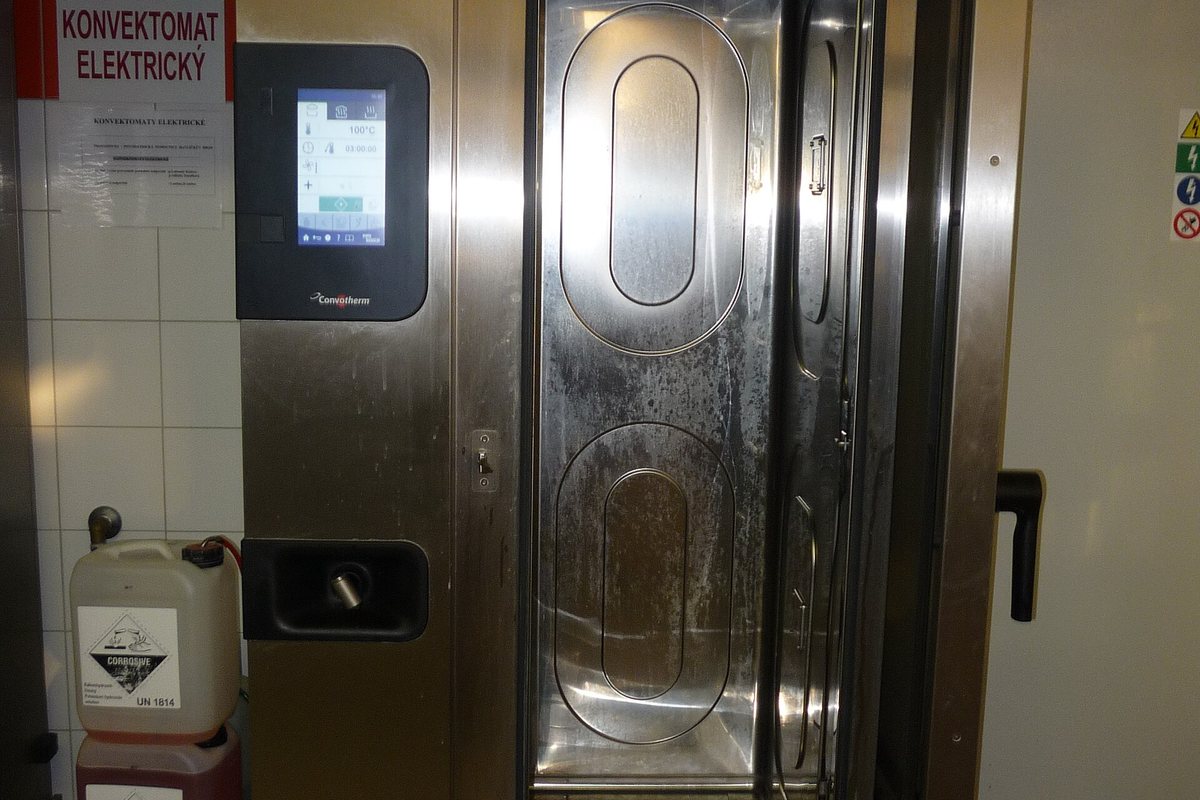
- Automatic cleaning. Electrolux Professional describes automated cleaning cycles with automatic detergent dosing and multi-stage wash programs. The cleaning chemicals sit next to the oven, as in the photo below.
Combi ovens also cook mixed loads. Rational says different foods can cook at the same time without much transfer of taste. More on the brands: how a Rational combi oven works, the Rational iCombi Pro, sous vide in a Rational and what an Alto-Shaam is used for. For installation questions, see whether a Rational needs a hood and whether combi ovens use gas.
Home combi steam ovens
Home combi ovens come in two forms.
Built-in models fit a wall oven cabinet. The Miele DGC 6805 XL needs a mains water connection and a drain, cooks with steam on up to three levels at once, and fits a niche 560 mm wide and 450 mm high. Wolf sells its convection steam oven in two versions: the plumbed CSOP, which needs a water line and a drain rated for water up to 130 F (55 C), and the non-plumbed CSO, which you fill by hand and which cannot be connected to a water line later.
Countertop models sit on the counter and use a water tank. The Anova Precision Oven 2.0 has a 2.4 L tank, a 1.2 cubic foot cavity, runs on a standard 120 V outlet at 1,800 W, and offers 12 modes including sous vide, steam, air fry, proof and dehydrate. Anova listed it at $999, down from a regular price of $1,299, when we checked on 19 November 2026. Read whether the Anova is a steam oven and our countertop oven picks for other options.
Combi oven vs convection oven vs steam oven
| Convection oven | Steam oven | Combi oven | |
|---|---|---|---|
| Heat | Dry, fan forced | Moist (steam) | Dry, moist or both |
| Humidity control | No | Steam only | Set by percentage on many models |
| Water needed | No | Tank or plumbed | Tank or plumbed |
If you are deciding whether you need one, our answers on whether a steam oven is worth it and whether you still need a microwave with a combi oven go into the trade-offs.
What is a combi oven good for?
Rational lists cooking vegetables and potatoes quickly but gently, baking rolls and cakes, and roasting or braising meat. It also says the combination supports juicy results for roasts, poultry and seafood. In a commercial kitchen, one cabinet replaces several pieces of equipment. For a full list of uses, see what a combi oven is good for and what a combi steam oven is used for.
Frequently asked questions
Is a combi oven the same as a steam oven?
No. A steam oven cooks with moist heat only, while a combi oven can also run as a convection oven and mix the two. Miele describes its DGC 6805 as a steam combination oven with a fully fledged oven mode, which is the difference in one line.
Do combi ovens need a water line?
Not always. Built-in plumbed models such as the Miele DGC 6805 and Wolf’s plumbed convection steam ovens need a water supply and a drain. Tank models, such as Wolf’s non-plumbed oven and the countertop Anova Precision Oven with its 2.4 L tank, are filled by hand.
How hot does a combi oven get?
It depends on the model. Rational lists hot air up to 300 C (575 F) and steam up to 130 C (265 F). The Miele DGC 6805 reaches 225 C in oven mode, and the Anova Precision Oven reaches 482 F.
Can a combi oven air fry?
Some can. Air Fry is one of the 12 cooking modes on the Anova Precision Oven, and Rational lists AirFry among the applications of the iCombi Pro.
Are there combi ovens for home kitchens?
Yes. Rational notes that household models now exist. Home options range from built-in 24 inch units from Miele and Wolf to countertop ovens such as the Anova Precision Oven.
Sources: Rational, What is a combi oven; Alto-Shaam, What is a combi; Electrolux Professional; Wolf, plumbed vs non-plumbed; Anova Precision Oven; Miele DGC 6805 XL specification sheet. Checked 19 November 2026.